BLOG, or DIE. A historian's journey through the Revolution
Saturday, 4 February 2012
Re-evaluating the U.S. Constitution
There is perhaps no other document in the history of American politics that is more hotly contested than the U.S. Constitution. For centuries historians and pundits alike have argued over the Founder’s intent and some have even questioned the Constitution’s validity in modern society. Each election-season candidates on both sides of the political spectrum refer to the Constitution in support of their platforms while the American public, whose vast majority has never even read the document, are led to believe that it contains a timeless wisdom that is essential to maintaining a functioning democratic republic. Unfortunately, the term ‘dysfunctional’ seems more appropriate when describing America today.
Some politicians, mainly those on ‘the right,’ claim that in order for the nation to return to its previous level of prominence, an unwavering allegiance to the guiding principles of the Constitution is absolutely necessary. The Tea Party movement in particular maintains this stance. There is also a more liberal, progressive portion who does not accept the inherent premise that all of the country’s problems can be remedied by simply returning to political philosophies from 1787. They call for reform in order to meet the ever-changing demands of today’s world.
There is a trend among those who have studied both the origins of the U.S. Constitution and the resulting course of American history which proposes that the system put in place by the Founders was never really as ingenious as we were led to believe, nor was it an unquestionable and infallible system of governance. In other words, America has always been ‘dysfunctional’ in many regards therefore the U.S. Constitution is not exactly superior. The liberties and freedoms that we enjoy today came as the result of great struggle and sacrifice of those who came after the Founders. We tend to forget that America was originally established by wealthy white men, for wealthy white men.
Progressive historians are not the only ones who have taken a more critical stance on the origins of the U.S. Constitution. There have been some highly-respected and brilliant politicians who were gutsy enough to acknowledge the Constitution’s flaws and antiquated principles. One of the most noteworthy of these was Thurgood Marshall who gave a highly controversial speech that was critical of the Founders and the U.S. Constitution. Marshall was one of the few voices pointing out that the original Constitution required numerous amendments and came to a crisis that required a Civil War to solve.
In a period of blind-obedient flag waving and patriotic rhetoric, Marshall’s comments were both disruptive and thought-provoking. They still are today. On May 6, 1987, Marshall presented his bicentennial speech at The Annual Seminar of the San Francisco Patent and Trademark Law Association. (Read entire speech here). Two main points in that speech outlined the popular misconceptions over the document:
Like many anniversary celebrations, the plan for 1987 takes particular events and holds them up as the source of all the very best that has followed. Patriotic feelings will surely swell, prompting proud proclamations of the wisdom, foresight, and sense of justice shared by the Framers and reflected in a written document now yellowed with age. This is unfortunate, not the patriotism itself, but the tendency for the celebration to oversimplify, and overlook the many other events that have been instrumental to our achievements as a nation. The focus of this celebration invites a complacent belief that the vision of those who debated and compromised in Philadelphia yielded the “more perfect Union” it is said we now enjoy.
I cannot accept this invitation, for I do not believe that the meaning of the Constitution was forever “fixed” at the Philadelphia Convention. Nor do I find the wisdom, foresight, and sense of justice exhibited by the Framers particularly profound. To the contrary, the government they devised was defective from the start, requiring several amendments, a civil war, and momentous social transformation to attain the system of constitutional government, and its respect for the individual freedoms and human rights, we hold as fundamental today. When contemporary Americans cite “The Constitution,” they invoke a concept that is vastly different from what the Framers barely began to construct two centuries ago…
…The men who gathered in Philadelphia in 1787 could not have envisioned these changes. They could not have imagined, nor would they have accepted, that the document they were drafting would one day be construed by a Supreme Court to which had been appointed a woman and the descendent of an African slave. We the People” no longer enslave, but the credit does not belong to the Framers. It belongs to those who refused to acquiesce in outdated notions of “liberty,” “justice,” and “equality,” and who strived to better them.
And so we must be careful, when focusing on the events which took place in Philadelphia two centuries ago, that we not overlook the momentous events which followed, and thereby lose our proper sense of perspective. Otherwise, the odds are that for many Americans the bicentennial celebration will be little more than a blind pilgrimage to the shrine of the original document now stored in a vault in the National Archives. If we seek, instead, a sensitive understanding of the Constitution’s inherent defects, and its promising evolution through 200 years of history, the celebration of the “Miracle at Philadelphia” will, in my view, be a far more meaningful and humbling experience. We will see that the true miracle was not the birth of the Constitution, but its life, a life nurtured through two turbulent centuries of our own making, and a life embodying much good fortune that was not.
I could not agree more.

Wednesday, 1 February 2012
NOTICE: Postings will be sparse for the next couple weeks as I will be hosting a great friend who is coming to town to conduct research at the National Archives. Maroon David is the recipient of the 2011 Littleton-Griswold Research Grant for Research in U.S. Legal History and is currently working on his dissertation “Off the Land: The Homestead Act and the Politics of Dispossession, 1862-1893.” We’ll be spending some down time on the local battlefields and I will share some insights from that experience here.
Which reminds me...we are now booking spring AABT tours for 2012.
Tuesday, 31 January 2012
When 'the Right's' version of history is wrong
Here is a follow-up to yesterday's post featuring David Barton…
Monday, 30 January 2012
They're not fooling anyone

WallBuilders web banner outlining their mission
When I was a senior in high school my history teacher asked us to write a paper about someone other than an American who had a definitive impact on history. Taking the villain route I wrote about Joseph Goebbels who was the Reich Minister of Propaganda in Nazi Germany from 1933 to 1945. I used Goebbels diaries as my main source, which to this day remains one of the most fascinating and disturbing things I’ve ever read. As one of Adolf Hitler's closest confidants, and as a man who killed six of his own children before committing suicide, Goebbels was equally as insane as he was intelligent. He was also a powerful propagandist who preyed upon the German population’s yearning for national pride. Without him, Hitler would not have cast such a spell over his people.
Goebbels proved that you can convince anyone of anything if they are woefully ignorant, or in desperate need of something to believe in. One of Hitler’s most powerful tools for capturing the hearts and minds of the German people was the manipulation of history to support his political agenda. By skewing the facts, misinterpreting meanings, and propagating fiction, the Nazi’s were able to create an alternate history of Germany’s origins. This fantasy later evolved into a form of patriotism that reinforced the Fuhrer’s vision for a supreme Aryan society.
Today, we have our own version of historically-slanted political marketing that is being disseminated by right-wing propagandists masquerading as historians. No one practices this crime more blatantly than David Barton‘s WallBuilders whose version of history paints America as a right-wing, ultra-conservative Christian nation that is embattled in a culture war for the very soul of the country. And although I am not equating the underlying efforts of this organization to the murderous evils that were perpetrated by the Nazis, I am comparing their practice of using history to support a political agenda. Just as Goebbels falsified Germany’s past; Barton and Co. have manipulated America’s for political gains. (What is really sad is the number of gullible folks who have been roped into believing it, although one peek at a Tea Party rally or Glenn Beck audience may explain why).
Unlike Goebbels, David Barton started out as a fundamentalist evangelist. He is a Texas minister, founder of WallBuilders and former co-chair of the Texas Republican Party. His books are dedicated to the idea that America should reject the concept of separation of church and state and institute Biblical law. He also maintains the notion that the Founding Fathers would be ardent supporters of the conservative movement if they were around today. Of course academically certified historians call Barton a Christian “revisionist” and constantly question the source of his many out-of-context quotes of American notables in his works. Not surprising, Barton rarely answers his critics with any credible sources for his historical claims.
Why should he? He is the unquestionable darling of the conservative and evangelical movements and the personal historian for right-wing mouthpieces Glenn Beck and Mike Huckabee. In other words, there are plenty of rubes that adore him – and that makes him dangerous. Despite Barton’s lack of academic credentials and his sloppy scholarship, he has managed to create an important niche by traveling all over the country telling audiences that the Founding Fathers were evangelicals just like them, and intended to create a nation of, by, and for Christians.
In a report published by the People for the American Way Foundation titled *David Barton: Propaganda Masquerading as History those in the know take Barton to task: Academic historians, according to the New York Times, give Barton’s work at best a “B minus,” noting that while the historical facts he cites are more or less accurate, his biased interpretation of them is not. The Baptist Joint Committee for Religious Liberty said that Barton’s work is “laced with exaggerations, half-truths and misstatements of fact” and the Texas Freedom Network calls him “a pseudo-intellectual fraud whose twisted interpretations of history are little more than propaganda.”
In 1995, Republican Senator Arlen Specter wrote in the Harvard Journal of Law and Public Policy that many of Barton’s arguments “range from the technical to the absurd” and that they “proceed from flawed and highly selective readings of both text and history.” Specter went on to state that Barton’s “pseudoscholarship would hardly be worth discussing, let alone disproving, were it not for the fact that it is taken so very seriously by so many people.” (*See a list of Barton’s most ridiculous historical claims.)
WallBuilders mission statement reads:
WallBuilders is an organization dedicated to presenting America's forgotten history and heroes, with an emphasis on the moral, religious, and constitutional foundation on which America was built – a foundation which, in recent years, has been seriously attacked and undermined. In accord with what was so accurately stated by George Washington, we believe that “the propitious [favorable] smiles of heaven can never be expected on a nation which disregards the eternal rules of order and right which heaven itself has ordained.” (Sounds like a blogger I know.)
This claim, like most of Barton’s claims, is absolute B.S. Their true mission statement should read like this:
WallBuilders is an organization dedicated to promoting David Barton’s book sales while manipulating American history in order to push our own conservative agenda on a highly gullible and susceptible portion of the American populace. By making up our own version of our nation’s origins and lacing it with outrageous religious claims, we hope to influence voters into supporting our own right-wing candidates, who in turn will support our own special interests upon their election into office. By mixing 1-part textbook and 2-parts bible, our special brand of psuedo-christian American history makes even heathen bastards like Thomas Jefferson look like devout, bible-thumping altar boys. PS. We vote like Jesus would.
For irrefutable proof of Barton’s dishonesty, I refer you to a 9-part video blog by Chris Rodda, author of the book, Liars of Jesus. In the video, Rodda attends a religious gathering featuring David Barton. At the conclusion of the meeting, Rodda approaches Barton and presents him with a copy of her book. A few months later, David Barton, on his radio program, mentioned Chris Rodda and portrayed the meeting as one in which Barton completely and utterly confounded the quote, "clueless" Rodda by expounding upon his wealth of historical knowledge. Rodda counters this claim by meticulously picking apart dozens of Barton's material with...get this, actual facts. (It is virtually impossible to watch this video series in its entirety and not come to the same conclusion.)
As a historian and as a Christian, I find the intentional politicization of my faith and the manipulation of my nation’s historical origins to be extremely offensive. I say watch out for the “David Bartons and WallBuilders” of the world. They are just as dangerous at skewing public perspective as the Goebbels. Stand up to them by speaking the truth in matters of both history and faith.

Friday, 27 January 2012
Have a drink on me
Referred to in historic literature as “the Green Fairy” Absinthe is described as a distilled, highly alcoholic (45–74% ABV / 90-148 proof) beverage. Its legacy has been one of controversy and its reputation as a mysterious, addictive, and mind-altering potion has caused it to be periodically banned in many countries. Absinthe has also served as the subject of numerous works of fine art, films, video, music and literature since the mid-19th century and has spawned an ever-growing subculture of 21st century Absinthe enthusiasts.
Numerous artists and writers living in France in the late 19th and early 20th century were noted Absinthe drinkers who featured the alcohol in their work. These included Emile Zola, Vincent van Gogh, Édouard Manet, Amedeo Modigliani, Arthur Rimbaud, Guy de Maupassant, Henri de Toulouse-Lautrec, and Paul Verlaine. Later artists and writers drew from this cultural well, including Pablo Picasso, August Strindberg, Oscar Wilde, and Ernest Hemingway.
Aleister Crowley was also known to be a habitual Absinthe drinker. Emile Cohl, an early pioneer in the art of animation, presented the effects of the drink in 1920 with the short film, Hasher’s Delirium and mystery novelist Sir Arthur Conan Doyle wrote that his renowned detective Sherlock Holmes indulged in the pleasures of Absinthe from time-to-time. Since its resurgence in recent years, modern artists such as musician Marilyn Manson and actor Johnny Depp are unabashed Absinthe drinkers with Manson actually producing his own line of the alcohol.
Despite the fact that there is no scientific proof, Absinthe continues to be frequently and improperly described in modern times as being hallucinogenic. This is entirely false (I think) and at least partly rooted in the fact that following some ten years of experiments with wormwood oil in the 19th century, the French psychiatrist Valentin Magnan studied 250 cases of alcoholism, and claimed that those who drank Absinthe were worse off than those drinking ordinary alcohol, having experienced rapid-onset hallucinations. Such accounts by opponents of Absinthe were cheerfully embraced by famous Absinthe drinkers, many of whom were bohemian artists or writers. Their frequent physical and emotional breakdowns were then blamed on Absinthe, although alcoholism, drug abuse and in some cases, mental-illness was more likely to blame.
As a cocktail connoisseur myself, I have been recently gifted with some Absinthe and will be consulting a close friend with a doctorate in history (and more impressive, the science of bartending) as to the proper preparation and consumption of the liquid. If it was good enough for those folks listed above, it’s certainly good enough for me. And I do hallucinate, I promise to write, or paint, or compose something brilliant. Cheers!
Image: Drinking Bacchus by Guido Reni (1575-1642)

Thursday, 26 January 2012
Two NEW books...
Eric and I have been busy going over the proofs for our upcoming book You Stink! Now that I am seeing the final layout (with the photos and tables inserted), I can say beyond a shadow of a doubt that this book has far exceeded our expectations. I can also say (now that I’ve read it cover to cover), that it is the best thing in print that I’ve ever been a part of. Plan on lots of speaking engagements and publicity to follow the release of this one folks. It’s something special.
In other news, I was just informed by the good folks at The History Press that my book on the Civil War in Spotsylvania County is being re-released as an eBook for Kindle and all those other electronic thingamajigs. Details to come.
Wednesday, 25 January 2012
Being honest about Abe
There is quite a lot of chatter going on around the CW blogosphere in regards to Abraham Lincoln getting an official holiday here in Virginia. Kevin Levin has a great discussion going on over at Civil War Memory that includes an individual who is actually involved in the crafting of the legislation. I will refer you to his post, but wanted to share my quick-take on the matter. The counter-argument that many folks are using is why should Lincoln deserve a holiday in Virginia? The implication is that he was ‘against’ the Old Dominion. This is NOT true. He was against the portion of Virginia that seceeded from the nation, the Confederate States of America to be exact. That is not the entire population of the state. What about all the enslaved African Americans that were freed by his actions? What about the loyalists who wanted to preserve the Union? Lincoln was actually ‘for’ them.
If we can celebrate Lee and Jackson for defending the Confederacy on behalf of whites, why can’t we also celebrate Lincoln who defeated the Confederacy on behalf of blacks? And if the proud descendants of Virginia’s Confederate Veterans can celebrate their heroes – why can’t the proud descendants of Virginia slaves likewise celebrate theirs? The door swings BOTH ways in my opinion. Whether you’re a Lincoln fan or not, to imply that he did not have a positive impact on Virginia that is worthy of remembrance is wrong.
Posted by ny5/pinstripepress
at 12:22 PM EST
Updated: Thursday, 26 January 2012 10:17 AM EST
Permalink |
Share This Post

Tuesday, 17 January 2012
Taking Stonewall down off the pedestal
It’s certainly no secret that my affection for the life and legacy of General Thomas J. Jackson has been a major influence on my life both privately and professionally:
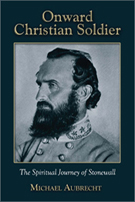
My first book (published back in 2005) was a religious biography on Jackson titled Onward Christian Soldier. Since then I've penned at least a dozen or so articles and have presented three lectures and a banquet address on him; I once taught an 8-week bible study class on Jackson’s piousness at my church; I started a web portal for Jackson-related information titled The Jackson Society; I’ve worked on multiple Jackson-specific studies for Mort Kunstler paintings; Jackson is featured (or at least mentioned) in 5 of my Civil War books; I have received awards from the UDC and SCV for my published works on Jackson; I am often requested for private tours to the Stonewall Jackson Shrine; I own and probably have read more books about Jackson than any other subject; my personal license plate says STOWNWL; and my youngest son is named after the good general.
Cleary I am fascinated with the guy and have spent a considerable amount of time studying him. That said, I now find myself at a point where I must suspend my own idol-worship practices and accept the painful reality that Stonewall Jackson is not hero material. Why? Because I can no longer gloss over the dark realities of this man’s life that I was once captivated by. I can no longer compartmentalize the dreadful cause in which he stood for. In other words, I can’t continue to disregard the sins on which Thomas Jackson’s memory has been founded and fortified. The legacy of Stonewall Jackson may be thick with inspiring religious fervor and military brilliance, but at the heart of it all is a man who ferociously fought for the perpetuation of slavery. How can anyone reconcile that?
Simply put, Thomas Jackson played a central role in a movement that was founded on what we would consider today to be political treason and prejudice. Jackson himself was a complex participant, a walking contradiction of sorts in regards to politics and race. A Christian man, he founded a Sunday school for slave and free blacks in Lexington, yet at the same time, he conducted incredibly successful military campaigns that served a cause vehemently against granting their freedom. One act does not excuse the other.
Jackson’s untimely death is also said to have created an irreplaceable void in the South’s high-command. Therefore one can only conclude that if he had lived beyond the Spring of 1863, the potential for a Confederate victory would have been bolstered – a victory that would have ultimately maintained the institution of human bondage as the primary cog in the economic-engine of the agricultural south.
The reality is that Thomas Jackson “stood as a stonewall” against his own government and repeatedly defeated a Union Army who were pursuing the liberty and freedom of enslaved African-Americans. Yes I get the State’s Rights and defending Virginia soil counter-arguments and absolutely agree that it was an important aspect of the southern cause, but the question I now ask is what “rights” were they defending? The answer is the right to independently govern a society that maintained the institution of slavery. Once again, you can’t get around that no matter how hard you try.
It’s very easy to get caught up in all of the reverence and awe that has been showered upon the Confederacy’s heroes over the last 150 years. With countless monuments and markers testifying to their courage and tenacity, as well as book after book elevating them to a deity-like stature, Stonewall Jackson is a perfect example of a manufactured American titan. His persona has been carefully crafted and handed down for generations. We are taught that he was an Old Testament Warrior who died defending the sanctity of the Old Dominion. He is still worshipped and adored by folks on both sides of the Mason Dixon Line and his likeness is just as much a part of our pop-culture as any other historical figurehead. I am experiencing what I can only refer to as a conflict of conscience and I am looking at Thomas Jackson and his peers in a much different light nowadays. Much like our Founding Fathers, I believe that we must make a concerted effort to reconcile ourselves to the fact that these Confederate icons were not gods, nor are they truly worthy of the elevated statuses that we project on them. They were men. We must acknowledge their humanity and this includes their faults. Perhaps hardest of all, we must accept the fact that they fought for the wrong side.
Stonewall Jackson was a brilliant military commander, a faithful deacon, a loving husband and a brief doting father. These are traits to admire. He was also a socially awkward individual with little people skills, a terrible teacher and communicator who was disliked by most of his subordinate generals and in some regards a fanatically religious egotist who truly believed himself to be conducting the will of God. He was also by textbook definition a military traitor and a racist who voluntarily chose to fight for a deplorable cause. These are not traits to admire.
Professionally speaking, I will continue to be fascinated by this man and I am sure that he will return periodically as a subject in my work. He certainly remains a mainstay in my all-access battlefield tours. Personally speaking however, I no longer find myself emotionally-attached to or quite so enamored by him. That bias is gone. Jackson is no longer a “hero” to me. None of them are. I still respect the Confederacy's conviction, but I can no longer celebrate its cause.
Some of the most respected historians I know preach the notion that one must remain completely objective and impersonal if they really want to accurately convey their subject matter. A NPS chief historian told me once that the minute you become smitten with your subject, your interpretation is skewed. Another friend who is a professor at a major university stated that the second you start writing to bolster your own affections for an individual you are no longer a historian, you are a disciple. I've certainly been guilty of that when it comes to Stonewall Jackson. The hardest part of studying history is accepting the fact that the people you once admired were not really that admirable afterall. I believe it’s time that we take Stonewall down off the pedestal and recognize him for all that he truly was, good, bad, or indifferent – not at all the infallible and mythical figure that some of us have helped to perpetuate for over a century.
I think the best explanation for what I am feeling was posted in an article titled “Confederate Apologists” over at Vast Public Indifference:
When our focus is on honoring the men who fought and died, no doubt bravely, without ever really grappling with what they were fighting for, we don’t learn anything. When we implicitly deny the horror of slavery and the continual betrayal of African-Americans during and after the war, we are setting ourselves up to accept racist fantasies in the present. When we fawn over Southern leaders like Lee and Jackson as models of American manhood, what we are really doing is yearning for a white, Christian, patriarchal past in which women and slaves knew their places and real men were subordinate only to God.

Monday, 16 January 2012
NEW book now available!
It has been over three years since I’ve been able to announce the pre-order availability of one of my books. I am especially fond of this project as I got to co-author it with one of my favorite Civil War historians, Eric J. Wittenberg.
Years ago I caught Eric on PCTV participating in a Gettysburg College panel discussion on cavalry operations. I went on to review several of his books for The Free Lance-Star. Now just a few years later, I am sharing a cover credit while helping to fulfill an idea that Eric's been carrying around since 1974.
I am also thankful for the opportunity this project has given me to revisit my earliest writing days at Baseball-Almanac. Eric and I anticipate doing a lot of publicity surrounding this title to include media appearances, speaking engagements and a website. The official release will be this spring, but you can pre-order it now from The Kent State University Press.
You Stink! Major League Baseball’s Terrible Teams and Pathetic Players
by Eric J. Wittenberg & Michael Aubrecht
There are countless volumes celebrating the best teams in professional baseball. Unfortunately, winning represents only one side of the game. For every champion’s record-setting season, there has been an equally memorable story of defeat. These teams and their shameful contributions to America’s national pastime have been a neglected topic in the annals of baseball history. Until now. In “You Stink!,” two fanatical historians (or historian fans), Michael Aubrecht and Eric Wittenberg, give credit where it is far overdue with a statistically backed, satirical look at the worst teams and individuals ever to set foot on a diamond. “You Stink!” includes franchise origins, detailed stats, player profiles, photos, and more, as well as a collection of long-format essays in a “Hall of Shame” that recognizes some of the worst moments ever witnessed on a ball field.
CONTENTS:
Foreword by Dave Raymond (The Philly Phanatic)
Introduction: Monument to Mediocrity
TERRIBLE TEAMS:
NOT LOUISVILLE SLUGGERS: The 1889 Louisville Colonels
BAD NEWS BROWNIES: The 1898 St. Louis Browns
SQUASHED LIKE A BUG: The 1899 Cleveland Spiders
“ET TU, BRUTE?”: The 1904 Washington Senators
THE CURSE CONTINUES: The 1932 Boston Red Sox
EVEN THE BABE COULDN’T SAVE THIS ONE: The 1935 Boston Braves
FROM DYNASTY TO DESPAIR: The 1916 Philadelphia Athletics
62.5 GAMES OUT OF FIRST PLACE: The 1942 Philadelphia Phillies & A MLB RECORD 23 STRAIGHT LOSSES: The 1961 Phillies
AT LEAST THEY WERE CONSISTENT: The 1950-1954 Pittsburgh Pirates
THE WORST RECORD OF THE MODERN ERA: The 1962 New York Mets
ONE YEAR OF WRETCHEDNESS: The 1969 Seattle Pilots
IN NEED OF FORGIVENESS: The 1973 San Diego Padres
FUNDAMENTALLY FLAWED: The 1988 Baltimore Orioles
A COMPLETE MASSACRE: The 1991 Cleveland Indians
SCAREDY CATS: The 2003 Detroit Tigers
HALL OF SHAME:
Worst Season: FROM HEROES TO ZEROS: The 1884 Wilmington Quicksteps
Worst Investment: MONEY FOR NOTHING: $100M 2008 Seattle Mariners
Worst Collapse: ROTTEN TO THE (BIG APPLE) CORE: The 2007 New York Mets
Worst Pitching Staff: SCORING TEN RUNS A GAME BUT STILL LOSING: The 1930 Philadelphia Phillies
Worst Scandal: CHEATERS NEVER WIN: The 1919 “Black Sox” Scandal
Worst Call: *61 IN ’61: Maris Gets the Asterisk
Worst Team Year in and Year Out: ABANDON SHIP: The Pittsburgh Pirates and 17+ Straight Losing Seasons
TOP 10 WORST PLAYS:
1. Buckner’s Blooper
2. Fred Merkle’s Boner
3. Pete Rose Ruins Ray Fosse
4. George Brett’s Pine Tar Incident
5. Cap Anson’s Racist Reluctance
6. Players’ Strikes (’72, ’81, ‘94)
7. Mickey Owen's Passed Ball
8. Babe Slugs Umpire Brick Owens
9. Disco Demolition Debacle
10. Brooklyn Dodgers Go West
WORST PLAYERS:
BATTER: Bill Bergen
PITCHER: Jim Hughey
CATCHER: John Humphries
FIELDER: Tony Suck
GRAND “CHAMPION”: Clarence “Choo Choo” Coleman
OWNERS: The Not-So-Mighty Quinns
DISAPPOINTMENT ON THE DIAMOND: A Timeline of Terribleness
NOTABLE QUOTABLES: Lines about Losing…
*This book is 330+ pages and features over 50 photographs.

Saturday, 14 January 2012
Americas first Sexual Revolution

Often referred to as the “oldest profession on earth,” prostitution has been a mainstay in and around military encampments since biblical times. Today the act of trading sex for money remains a seedy yet implicit part of the social interaction between many of the world’s occupying troops and the regions in which they inhabit. As many of these armies are often located in third-world countries or destructive war zones, the economically challenged and impoverished civilians that surround them are left with few alternatives for generating income. Out of desperation many women turn to selling their bodies to locally stationed soldiers and sailors in order to feed their families. As a result, many of these ports and bases are known primarily throughout the military community for their brothels.American armies are certainly no stranger to eliciting the services of prostitutes. From the Revolutionary and the Civil Wars, through WW2, Vietnam, and even today, U.S. troops always have, and always will, pay for female companionship. When George Washington was a young military man brothels could be found in port cities like New York; Philadelphia; Charleston, S.C.; and Newport, R.I. Prostitution was also ubiquitous in Philadelphia’s “Hell Town,” the prototype for the red light districts that would spread across America in the next century. Philly’s most famous resident Benjamin Franklin himself admitted to hiring his share of strumpets, as he called them.
In The Urban Geography of Commercial Sex: Prostitution in New York City, 1790-1860: The Other Americans: Sexual Variance in the National Past, Dr. Timothy Gilfoyle writes that, “For much of the eighteenth century, ‘courtesans’ promenaded along the Battery after nightfall. On the eve of the Revolution, over 500 ‘ladies of pleasure [kept] lodgings contiguous within the consecrated liberties of St. Paul’s [Chapel].’ A few blocks north, at the entrance to King’s College (later Columbia University), Robert M’Robert claimed that dozens of prostitutes provided ‘a temptation to the youth that have occasion to pass so often that way.”
The introduction of prostitution in American military encampments came during the nation's first fight. Droves of “Lewd women” as they were referred to, flocked to the tents of the Continental Army whether they were in winter quarters or on campaign.
Prostitutes were a worrisome presence to army leadership, particularly because of the possible spread of venereal diseases. According to the book Belonging to the Army by Holly Ann Mayer, dealing with prostitution was an ongoing problem: “Reports regarding the incidence of venereal disease among male soldiers present a serious matter for a military force too often far below quota in numbers of fighting troops.” Mayer also states that “commanders tried to prevent the spread of social diseases and ... social and military disorder by banning prostitutes from their camps.” No doubt those women who sought follower status in the army avoided acts of prostitution to preserve their place in the Continental community, since they full well knew they would be drummed out of the service if caught.
Despite the health risks some army officers encouraged the presence of prostitutes to help maintain morale. They also turned a blind eye to their troops midnight patronagie of nearby brothels. Often men would sneak out to visit local whore houses after their commanders retired for the night. In New York, this covert act was referred to as visiting “the holy ground,” while in Virginia their seedy destinations were called “disorderly houses.”
Even Valley Forge, the most famous of all Continental Army encampments was not immune to the pleasures of the flesh. Despite the fact that General George Washington himself had set strict standards that prohibited the fraternization between single men and women, local prostitutes were able to infiltrate the camp. (Ironically little has changed as there are currently 22 escort services operating in and around the Valley Forge area.)
Despite their reputation as a more liberal society the French in particular found the wide-spread prostitution in the Colonies quite perplexing. As the French Army arrived in America to assist the fledgling Continental Army from inevitable annihilation, many of them recorded their personal impressions of the locals in their journals. One French officer, Comte de Clermont-Crevecoeur, while in Newport, Rhode Island, wondered why there were so many prostitutes, “in a country so new where vice should not be deeply rooted…” He attributed this epidemic to the peculiar practice of “Bundling”:
Bundling was an activity granted by parents that permitted a young man who declared himself to be in love with a girl to shut himself up in a room with her, lavishing tender caresses upon her in bed, but “stopping short of those reserved for marriage alone; otherwise he would transgress the established laws of bundling.” A truly virtuous woman would resist and conform to the letter of the law, while “those more amply endowed by nature in this respect succumb to this tender sport.” What’s more, a couple could play this game for five or six years or longer before deciding to marry, without committing finally to wedlock. If a girl was seduced and had a child, it was not she who was disgraced, but the man. Respectable houses were closed to him, and he could not marry into one of the better families.
A married woman, he continued, was very faithful to her husband, even though she might have led “a most licentious life” in the years before marriage. Men didn’t seem to mind this; they were not fussy and believed a girl should be free until she was married. If a married woman committed adultery, the husband announced his wife’s “delinquency” and published it in the papers, stating that he would neither pay her bills nor be liable for her debts. Yet even if the situation deteriorated to that stage, adultery was no excuse for dissolving a marriage—the laws did not permit it, and the husbands were quite patient about waiting for their wives to repent. (– Pages 81-82)
Some scholars acknowledge the impact of prostitution on the Colonials during the American Revolution, but also believe the English army was far more frequent in the practice of it. According to an article in the Pittsburgh Post Gazette, Duquesne University history professor Holly A. Mayer has developed years of research on the “camp followers” who accompanied the army during the Revolutionary War. She’s the first to acknowledge that there is a long-standing relationship between prostitution and the military. “You can go outside any Army post today, and you’re going to find three things: bars, car dealers and some sort of prostitution service.” But prostitution depends on cash, and by and large, soldiers in the Continental Army were too poor to offer prostitutes much steady employment, she said. “If prostitutes were going to follow any army then, they would have followed the British Army, because they got paid in good, hard currency.”
Regardless of their loyalties many prostitutes followed whatever army was closest in pursuit of their purse. These ladies of the night continued to provide sexual services to both sides of the conflict until the British Army’s surrender at Yorktown in 1781. Despite the post-war departure of the English, French and Continental troops, prostitution among the local standing military continued intermittently during the War of 1812 and remerged in force at army encampments on both sides during America’s Civil War.

Saturday, 7 January 2012
Next Film Project:


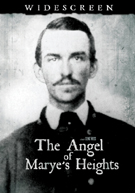
PRESS RELEASE: Right Stripe Media LLC has recently purchased the rights to produce a documentary based on the Sunstone Press book “Blackwater Draw, Three Lives, Billy the Kid and the Murders that Started the Lincoln County War” by David S. Turk. Consulting in front of and behind the camera are noted law-enforcement historians David Turk and Steve Sederwall. In addition to being the author of “Blackwater Draw,” Turk is also the Historian for the U.S. Marshals Service and is no stranger to historical “cold cases.” Sederwall has been pursuing Billy the Kid cases for over a decade. As a law enforcement officer, he began his career as a Garland, Texas Police Officer and later served for the Los Angeles Police Department before his retirement as a Federal Criminal Investigator. Best known for their critically-acclaimed Civil War film “The Angel of Marye’s Heights,” Right Stripe Media’s focus is to bring unique stories to life in a manner that resonates with the audience. Historical themes and stories that examine the nature of man are of particular interest. Production is slated to begin in 2012 with multiple location shoots in New Mexico. For inquiries or additional information, contact Clint Ross and Michael Aubrecht at Right Stripe Media LLC at 703-760-6324, or email info@theangelmovie.com. For a look at RSM’s debut film, or to purchase the DVD “The Angel of Marye’s Heights,” visit www.theangelmovie.com.

Monday, 2 January 2012
Thanks for your patience.
Tomorrow I begin my new position as the Project Coordinator for Domestic Operations at the Investigative Operations Division of the U.S. Marshals Service. As a result, my posts will be far and few between over the next few weeks as I get acclimated. I will post again when time permits. There is still much to share including a new book release.
Wednesday, 28 December 2011
Last post of 2011
As this month marks the 149th anniversary of the Battle of Fredericksburg, here is a video of my talk on the 123rd Pennsylvania Volunteers' experience in that engagement. This lecture was presented back in April for the 2011 Civil War Weekend at the Carnegie Library and Music Hall in Pittsburgh, PA. On a related note, I have just agreed to lead the 2012 Staff Ride at the Fredericksburg Battlefield for the senior staff here at the U.S. Marshals Service. More on that later.
Posted by ny5/pinstripepress
at 7:44 AM EST
Updated: Wednesday, 28 December 2011 7:47 AM EST
Permalink |
Share This Post
Tuesday, 27 December 2011
Misquoting the Founders is a Political Epidemic
It’s no secret that the GOP has made a routine out of misquoting the Founding Fathers in support of their political agenda. According to The Washington Post: “Republicans have used incorrect quotes to portray the founders as sympathetic to modern conservatism. Knowing that people derive hope from the words of our founding fathers, Republicans frequently use and misuse their words to garner support for their positions.” Here are just a few of these counterfeit quotations:
“Thomas Jefferson wrote that government is best that governs least.” – Senator Rand Paul (R-KY)
“Government is not reason. It is not eloquence. It is force. Like fire, it is a dangerous servant and a fearful master.” – Congressman Louie Gohmert (R-TX) claiming to quote George Washington
“As Jefferson said, the price of freedom is eternal vigilance.” – Congresswoman Virginia Foxx (R-NC)
“Our third president, Thomas Jefferson, said this, ‘Eternal vigilance is the price of freedom.’” – Congressman Marlin Stutzman (R-IN)
“President George Washington said that the right to keep and bear arms is ‘the most effectual means of preserving peace.’” – Senator Orrin Hatch (R-UT)
“The democracy will cease to exist, when you take away from those who are willing to work to give to those who would not.” – Senator Tom Coburn (R-OK), claiming to be quoting Jefferson
None of these quotes were said by their attributers yet the Republicans continue to misquote them again and again. Personally, I don’t know what is more embarrassing for these folks, getting tangled in their own misquotes or regurgitating piss-poor research contributions from their staff. Either way, we are on to them. Edward Lengel, a UVA professor who edited George Washington’s personal papers spoke on the irony of this practice. According to him this is the exact type of political propaganda that would have infuriated the Founders: “It’s a betrayal of Washington’s legacy. It’s a betrayal of who he was. He would have been outraged to find people manipulating his words, or making things up, to indicate that he supposedly believed this or that thing.”
I will add that it is also a betrayal of the American voter.
Posted by ny5/pinstripepress
at 9:52 AM EST
Updated: Wednesday, 28 December 2011 7:39 AM EST
Permalink |
Share This Post

Friday, 23 December 2011
Washington's "Christmas Crossing" corrected

Tom Suozzi talks with artist Mort Kunstler in his studio about his version
of Washington Crossing the Delaware. (Photo: Newsday/Audrey C. Tiernan)
UPDATE: Here is a television segment featuring Mort’s painting on ABC World News.
After months of research, sketching and painting at the easel, our friend Mort Künstler has completed his version of George Washington's crossing of the Delaware River, a project intended to retain the drama of the iconic patriotic image painted in 1851 by Emanuel Leutze while correcting its myriad of mistakes. As one of his most challenging depictions, Mort himself has said that this will be the piece that he is remembered for.
Historians note Leutze's famous 1851 painting "Washington Crossing the Delaware," owned by the Metropolitan Museum of Art, contains numerous historical errors:
1. The original painting depicts the trip in daylight rather than at night, and in clear weather; the Dec. 1776, crossing took place in a nor'easter with heavy snow and sleet.
2. The Delaware River is not nearly as wide as depicted. At the crossing point, it's only 800 feet from Pennsylvania to New Jersey.
3. Leutze painted the river as being clogged with mini-icebergs rather than covered in broken-up sheet ice.
4. Standing in a small boat as the one depicted in a storm, Washington would have fallen overboard or capsized the craft. Longer Durham cargo vessels (one is shown in the background of the Künstler painting) carried soldiers while a flat-top ferry transported horses, cannons and probably Washington, historians say.
5. The most notable error is the inclusion of the American flag as the “Stars and Stripes” design was not adopted until 1777.


Posted by ny5/pinstripepress
at 8:30 AM EST
Updated: Wednesday, 28 December 2011 8:22 AM EST
Permalink |
Share This Post

Tuesday, 20 December 2011
The Devout Beliefs of an Unbeliever: Thomas Paines Age of Reason
Often referred to as the “Father of the American Revolution,” Thomas Paine was also the best-selling author in eighteenth-century America. Even those with a casual knowledge of our nation’s history are familiar with his most popular work titled Common Sense. This was the radical political pamphlet that he anonymously published as “an Englishman” in January of 1776. Common Sense presented the American colonists with a bold argument for freedom from English rule at a time when the question of independence was still being debated. Upon its release, Common Sense quickly spread among the literate and within three months 100,000 copies were sold throughout the colonies.
Thomas Paine went on to write additional pamphlets, including a highly controversial deistic argument titled The Age of Reason; Being an Investigation of True and Fabulous Theology. This publication levied harsh criticism on the institution of organized religion and challenged the very legitimacy of the Christian Bible. Published in three parts over a period of three years (1794, 1795, and 1807), it was also a bestseller that ignited a short-lived deistic revival.
Much like Thomas Jefferson, who wrote his own interpretation of scripture, Paine favored scientific reason over faith and rejected all biblical references to miracles. While promoting the concept of “natural religion,” he openly abandoned the notion that the Christian Bible was a divinely inspired book and argued against the very existence of a creator-God. By taking a philosophical stance that was usually reserved for the educated elite and by making it both irreverent and inexpensive, Paine was able to appeal to a mass readership, thus increasing sales while spreading his divisive message. Although it did not sell nearly as well as Common Sense, The Age of Reason went through seventeen editions and sold thousands of copies in the United States.
Not surprisingly, Paine’s irreverent assumptions on organized religion (Christianity in particular) were met with much anger and outrage, especially from the Church of England. The British government reacted to this by prosecuting any printer or bookseller that tried to produce and/or distribute the book. The content of The Age of Reason was divided into three sections: In Part I, Paine outlined his major arguments and personal creed. In Parts II and III, he analyzed specific portions of the Christian Bible in order to demonstrate that it was not the revealed “Word of God.” Throughout the book Paine placed an emphasis on the individual’s right of conscience and an inherent accountability to be held to oneself. At the beginning of Part I, he summarized his personal creed:
“I believe in one God, and no more; and I hope for happiness beyond this life.
I believe in the equality of man; and I believe that religious duties consist in doing justice, loving mercy, and endeavoring to make our fellow-creatures happy.
But, lest it should be supposed that I believe many other things in addition to these, I shall, in the progress of this work, declare the things I do not believe, and my reasons for not believing them.
I do not believe in the creed professed by the Jewish Church, by the Roman Church, by the Greek Church, by the Turkish Church, by the Protestant Church, nor by any church that I know of. My own mind is my own church.
All national institutions of churches, whether Jewish, Christian or Turkish, appear to me no other than human inventions, set up to terrify and enslave mankind, and monopolize power and profit.
I do not mean by this declaration to condemn those who believe otherwise; they have the same right to their belief as I have to mine. But it is necessary to the happiness of man that he be mentally faithful to himself. Infidelity does not consist in believing, or in disbelieving; it consists in professing to believe what he does not believe.”
In his argument against the Bible, Paine not only questioned the sacredness of the text, but also its historical origins. He often referred to the stories as “fabulous mythology” and stated that the Book of Proverbs was “inferior in keenness to the proverbs of the Spaniards, and not more wise and economical than those of the American Franklin [referring to Benjamin].” Paine then went on to question the overall consistency and accuracy of the Bible, blaming the errors on man as opposed to a divine being. Many of his comparative-reasoning styles are still practiced today in biblical scholarship. According to Paine:
“Is it not a species of blasphemy to call the New Testament revealed religion, when we see in it such contradictions and absurdities?”
“It is not a God, just and good, but a devil, under the name of God, that the Bible describes.”
“That God cannot lie, is no advantage to your argument, because it is no proof that priests can not, or that the Bible does not.”
“There are matters in the Bible, said to be done by the express commandment of God, that are shocking to humanity and to every idea we have of moral justice.”
The Old Testament in particular became a major target for Paine’s criticisms. He argued that the God of the Old Testament was so tyrannical and cruel that he could only be a “human-authored-myth.” He then went on to present a series of incidents supporting this theory including an account from the Book of Numbers, specifically 31:13–47, in which Moses orders the slaughter of thousands of boys and women, as well as the abduction of virgins. Excerpt: “15 ‘Have you allowed all the women to live?’ he asked them. 16 ‘They were the ones who followed Balaam’s advice and enticed the Israelites to be unfaithful to the LORD in the Peor incident, so that a plague struck the LORD’s people. 17 Now kill all the boys. And kill every woman who has slept with a man, 18 but save for yourselves every girl who has never slept with a man.’” Paine called this kind of content a “book of lies, wickedness, and blasphemy; for what can be greater blasphemy than to ascribe the wickedness of man to the orders of the Almighty!”
Another sentiment offered by Paine was the distrust of religious institutions. This included the indicting of priests for their want of power and the Church’s opposition to scientific investigation. He recalled: “Soon after I had published the pamphlet ‘Common Sense,’ in America, I saw the exceeding probability that a revolution in the system of government would be followed by a revolution in the system of religion. The adulterous connection of Church and State, wherever it has taken place has so effectually prohibited by pains and penalties every discussion upon established creeds, and upon first principles of religion, that until the system of government should be changed, those subjects could not be brought fairly and openly before the world; but that whenever this should be done, a revolution in the system of religion would follow.”

Isaac Cruikshank cartoon attacking Paine; The caption reads:
“The Age of Reason; or, the World turned Topsy-turvy exemplified in Paine's Works!”
Over the years many historians have supported the notion that Paine’s religious and political philosophies were very much in support of one another. Therefore Paine felt that propagating a religious revolution was crucial to the success of any political revolution, not only because the Church controlled the State, but also because it required a radically new way of thinking and looking at the world. The threat to achieving this “political enlightenment” was directly attributed to a religious superstition that prevented one from diversifying his or her antiquated perspective or rejecting what he or she had been taught. Scholars have referred to this theory as Paine’s “secular-millennialism.” Perhaps his most telling statement on the subject of reform (religious and otherwise) came at the conclusion of his Rights of Man when he stated: “From what we now see, nothing of reform in the political world ought to be held improbable. It is an age of revolutions, in which everything may be looked for.”
One might conclude that it was the climate in which it was conceived that made The Age of Reason such a condemning piece. Paine had originally penned and distributed the first part of the pamphlet while he was imprisoned in France for refusing to endorse the execution of King Louis XVI. Certain of his own impending execution, he remained sincere in the convictions he proclaimed. A fellow prisoner later bore testimony to his sincerity when he recalled that “Mr. Paine, while hourly expecting to die, read to me parts of the 'Age of Reason;' and every night when I left him, to be separately locked up, and expected not to see him alive in the morning, he always expressed his firm belief in the principles of that book, and begged I would tell the world such were his dying opinions. He was the most conscientious man I ever knew.”
Spared a trip to the guillotine, Paine was released in 1794 thanks to the efforts of the U.S. Minister to France, James Monroe who stated that “The citizens of the United States cannot look back upon the time of their own revolution without recollecting among the names of their most distinguished patriots, that of Thomas Paine.” He returned to America in 1802 only to discover that his contributions in the fight for independence were headed for obliteration due to his divisive religious views. Fortunately, this unpopularity with the church-going public was not shared by Paine’s political friends. John Adams stuck by his compatriot and proclaimed that “History is to ascribe the American Revolution to Thomas Paine.” Referring to Paine’s time in prison in his own native country, Lafayette declared that “A free America without Thomas Paine is unthinkable.”
His thoughts on the spiritual realm are still debated today. In 2006, English writer and atheist Christopher Hitchens wrote a book about the affect of Paine’s writings. In it he summarized the need for his words in today’s political spectrum. He wrote, “If the rights of man are to be upheld in a dark time, we shall require an age of reason. In a time when both rights and reason are under several kinds of open and covert attack, the life and writing of Thomas Paine will always be part of the arsenal on which we shall need to depend.”
In the final chapter of The Age of Reason, Paine sums up his entire belief on this world and the next. He writes:
“The book called the New Testament, which I hold to be fabulous and have shown to be false, gives an account in the 25th chapter of Matthew, of what is there called the last day, or the day of judgment. The whole world, according to that account, is divided into two parts, the righteous and the unrighteous, figuratively called the sheep and the goats. They are then to receive their sentence. To the one, figuratively called the sheep, it says, ‘Come ye blessed of my Father, inherit the kingdom prepared for you from the foundation of the world.’ To the other, figuratively called the goats, it says, ‘Depart from me, ye cursed, into everlasting fire, prepared for the devil and his angels.’
My own opinion is, that those whose lives have been spent in doing good, and endeavoring to make their fellow-mortals happy, for this is the only way in which we can serve God, will be happy hereafter: and that the very wicked will meet with some punishment. This is my opinion. It is consistent with my idea of God’s justice, and with the reason that God has given me.”
Sources:
Davidson, Edward H. and William J. Scheick. Paine, Scripture, and Authority: The Age of Reason as Religious and Political Idea. Bethlehem: Lehigh University Press, 1994
Kates, Gary, 1989, “From Liberalism to Radicalism: Tom Paine's Rights of Man”, Journal of the History of Ideas: 569–587.
Larkin, Edward, 2005. Thomas Paine and the Literature of Revolution. Cambridge University Press.
Hitchens, Christopher, 2006. Thomas Paine’s “Rights of Man”: A Biography. Paine, Thomas. The Age of Reason, The Complete Edition World Union of Deists, 2009.
Paine, Thomas (Foner, Eric, editor), 1993. Writings. Library of America. Authoritative and scholarly edition containing Common Sense, the essays comprising the American Crisis series, Rights of Man, The Age of Reason, Agrarian Justice, and selected briefer writings, with authoritative texts and careful annotation.
Wheeler, Daniel, Life and Writings of Thomas Paine, Vincent & Parke, 1908.

Saturday, 17 December 2011
Fan mail to end 2011

[Received Dec. 17] Mr. Aubrecht, you are a disgrace.
Over the last year I have watched you disrespect our founders. You called them slaveholders and progressives. You insult our great patriot forefathers in the name of the blacks and the homosexuals. You talk bad about the Tea Party and say that America was not founded to be a Christian nation. You are naïve when you believe that academia doesn’t have an agenda. You have become the Kevin Levin of Revolutionary War bloggers. Maybe even a Brooks Simpson. You should be ashamed.
- J.M. Gutherie
Thanks J.M. I'm looking forward to an even better 2012. God Bless.
Sunday, 11 December 2011
Exploring the Sexuality of a Founding Father: Gay history in the classroom and how it may reshape how we think about our past

Alexander Hamilton and John Laurens statue in Lafayette Park in Philadelphia
Pennsylvania, named one of "The Queerest Historical Sites."
In July of 2011, California became the first state to require that public school textbooks include the accomplishments of gay, lesbian and transgender Americans. Known as SB48, the measure won final passage from the state legislature when it passed on a 49-25 party-line vote, with Democrats in favor and Republicans opposed. According to LGBT Weekly, "The Fair, Accurate, Inclusive and Respectful (FAIR) Education Act amends the Education Code to finally include the contributions of LGBT people in social sciences instruction. The bill also prohibits the state Board of Education from adopting discriminatory instruction and discriminatory materials."
After signing the mandate into law Governor Jerry Brown released the following statement: "This bill revises existing laws that prohibit discrimination in education and ensures that the important contributions of Americans from all backgrounds and walks of life are included in our history books. It represents an important step forward for our state."
This historic step toward educational diversity came about as part of a liberal movement to broaden the content of history lessons taught in American classrooms. Throughout the nineties, historians and educators alike cited the need for more-inclusive lesson plans that would enable a broader demographic of students to relate to the material. This included the integration of noteworthy contributions from disabled Americans, as well as Hispanics and Pacific Islanders. Much like the civil-rights-based movement of the sixties, which incorporated more female and African American history in textbooks, this movement set out to remedy decades of neglect. One of the last groups to be addressed in American history textbooks is the gay community.
As the California ruling has opened the door for other U.S. states to revise their own curriculums to include the contributions of a broader sexual orientation, it also gives modern educators the opportunity to reexamine existing history in a different light. For over a century questions surrounding the sexuality of several American icons, including presidents James Buchanan and Abraham Lincoln, have been considered offensive and unmentionable. Today they could be the basis for a renewed interpretation. In fact, these studies could enable us to see things in a different perspective even though many of the questions raised have been quietly discussed for generations.
For fifteen years prior to his presidency, James Buchanan lived with his close friend and confidant, Alabama Senator William Rufus King, who later became vice president under Franklin Pierce. Their extremely close relationship ignited rumors around Washington D.C., prompting the ever-uncouth Andrew Jackson to refer to King as "Miss Nancy," while Aaron Brown spoke of the two gentlemen as "Buchanan and wife." The theory that one of America's most revered presidents, Abraham Lincoln was a homosexual is a more modern one. It is based on several circumstantial events and an explicit poem written by a teenage Lincoln that is open to interpretation. Gay activist C. A. Tripp has published multiple commentaries on the subject, stating that Lincoln's distant and difficult relationships with women stood in stark contrast to the warm relations that he shared with a number of men. Many Lincoln scholars vehemently refute this theory and the debate remains ongoing.
Perhaps no other American icon has had more speculation raised (and ignored) as to his sexual preference than Alexander Hamilton. This controversial Founding Father left behind an abundance of questions after dying a premature death following an ill-fated duel with political rival Aaron Burr. His is a story that begs for reexamination and it is one that may eventually necessitate revision for a whole new generation of Americans. Of course all historical analysis is subject to speculation, but what we have come to learn about the life and writings of Alexander Hamilton has revealed an interesting argument for his homosexuality.
As was quite common for men of his social stature, Hamilton was a complex man of many talents. Soldier, economist, political philosopher, constitutional lawyer, secretary of the Treasury, leader of the Federalist Party and founder of the U.S. Mint were just a few of the titles he held. Hamilton's climb toward political popularity was forged during his exquisite service during the American Revolutionary War. Initially acting as an artillery officer, he later became the senior aide-de-camp to General George Washington. Hamilton again served his commander-and-chief in 1794 during the "Whiskey Rebellion" tax-revolt, acting as the president's closest military confidant. Three years later, he was unanimously named as Washington's successor and commander of a new American army, mobilizing in preparation for a potential war with France. Fortunately, the need for such a force was negated thanks to the stubborn diplomacy of President John Adams.
It was while serving on Washington's staff that Hamilton met John Laurens, the man whose relationship with him has become the subject of much inquiry. Laurens was a successful soldier and statesman from South Carolina who gained approval by the Continental Congress in 1779 to recruit a regiment of 3,000 slaves by promising them freedom in return for fighting. Despite being married to Martha Manning, Laurens arrived in the colonies as a bachelor after leaving his wife behind in London. He joined the Continental Army and following the Battle of Brandywine, was made an aide-de-camp to General Washington with the rank of lieutenant colonel. He also served with the Baron von Steuben (another rumored homosexual), doing reconnaissance at the outset of the Battle of Monmouth.
While on campaign Laurens became close friends with his fellow aides, the Marquis de Lafayette and Alexander Hamilton. His relationship with the latter would become one of question as to whether the two shared a homosexual, or at least a homosocial relationship, unbeknownst to their peers. Adding to the complexity of their bond is Hamilton's reputation as an adulterer. In 1791 he admitted participating in a scandalous affair with the wife of James Reynolds. In an effort to limit the political ramifications of his actions, Hamilton published a full confession of his affair, shocking both his family and supporters by not merely admitting his guilt, but also by inexplicably narrating the affair at an unexpected level of detail. The public's reaction damaged Hamilton's standing for the rest of his life. That event however took place years after the untimely death of John Laurens in 1782.
As one who specializes in human sexuality, historian Jonathan Katz contends that the primary source in support of the Hamilton-Laurens relationship can be found in a series of intimate letters that were written shortly after Laurens left Washington's staff to return to his home state of South Carolina. His goal was to persuade the state's legislature to recruit African Americans, who were flocking to fight the Continentals as British Loyalists. Despite having no military reason, both men maintained their working relationship through correspondence.
Hamilton's first letter to Laurens was penned in April of 1779 and appears to be filled with innuendo:
Cold in my professions - warm in my friendships - I wish, my Dear Laurens, it were in my power, by actions rather than words, to convince you that I love you. I shall only tell you that ‘till you bade us Adieu, I hardly knew the value you had taught my heart to set upon you. Indeed, my friend, it was not well done. You know the opinion I entertain of mankind, and how much it is my desire to preserve myself free from particular attachments, and to keep my happiness independent of the caprice of others. You should not have taken advantage of my sensibility, to steal into my affections without my consent. But as you have done it, and as we are generally indulgent to those we love, I shall not scruple to pardon the fraud you have committed, on one condition; that for my sake, if not for your own, you will always continue to merit the partiality, which you have so artfully instilled into me. . . .
And Now my Dear as we are upon the subject of wife, I empower and command you to get me one in Carolina. Such a wife as I want will, I know, be difficult to be found, but if you succeed, it will be the stronger proof of your zeal and dexterity. . . .
If you should not readily meet with a lady that you think answers my description you can only advertise in the public papers and doubtless you will hear of many . . . who will be glad to become candidates for such a prize as I am. To excite their emulation, it will be necessary for you to give an account of the lover - his size, make, quality of mind and body, achievements, expectations, fortune, &c. In drawing my picture, you will no doubt be civil to your friend; mind you do justice to the length of my nose and don't forget, that I [about five words here have been mutilated in the manuscript - some scholars theorize that Hamilton was referring to his ‘manhood'].
After reviewing what I have written, I am ready to ask myself what could have put it into my head to hazard this Jeu de follie. Do I want a wife? No - I have plagues enough without desiring to add to the number that greatest of all; and if I were silly enough to do it, I should take care how I employ a proxy. Did I mean to show my wit? If I did, I am sure I have missed my aim. Did I only intend to [frisk]? In this I have succeeded, but I have done more. I have gratified my feelings, by lengthening out the only kind of intercourse now in my power with my friend. Adieu
Yours.
A Hamilton
On September 11, 1779, Hamilton wrote a second letter in which he referred to himself as a jealous lover:
I acknowledge but one letter from you, since you left us, of the 14th of July which just arrived in time to appease a violent conflict between my friendship and my pride. I have written you five or six letters since you left Philadelphia and I should have written you more had you made proper return. But like a jealous lover, when I thought you slighted my caresses, my affection was alarmed and my vanity piqued. I had almost resolved to lavish no more of them upon you and to reject you as an inconstant and an ungrateful -. But you have now disarmed my resentment and by a single mark of attention made up the quarrel. You must at least allow me a large stock of good nature. . . .
Have you not heard that I am on the point of becoming a benedict? I confess my sins. I am guilty. Next fall completes my doom. I give up my liberty to Miss Schuyler. She is a good hearted girl who I am sure will never play the termagant; though not a genius she has good sense enough to be agreeable, and though not a beauty, she has fine black eyes - is rather handsome and has every other requisite of the exterior to make a lover happy. And believe me, I am lover in earnest, though I do not speak of the perfections of my Mistress in the enthusiasm of Chivalry.
Is it true that you are confined to Pennsylvania? Cannot you pay us a visit? If you can, hasten to give us a pleasure which we shall relish with the sensibility of the sincerest friendship.
Adieu God bless you. . . .
A Hamilton
The lads all sympathize with you and send you the assurances of their love.
One year later on September 16, 1780, Hamilton penned a third correspondence to Laurens that appears to put his affections for the recipient to be above those for his current female mistress:
That you can speak only of your private affairs shall be no excuse for your not writing frequently. Remember that you write to your friends, and that friends have the same interests, pains, pleasures, sympathies; and that all men love egotism.
In spite of Schylers black eyes, I have still a part for the public and another for you; so your impatience to have me married is misplaced; a strange cure by the way, as if after matrimony I was to be less devoted that I am now. Let me tell you, that I intend to restore the empire of Hymen and that Cupid is to be his prime Minister. I wish you were at liberty to transgress the bounds of Pennsylvania. I would invite you after the fall to Albany to be witness to the final consummation. My Mistress is a good girl, and already loves you because I have told her you are a clever fellow and my friend; but mind, she loves you a l'americaine not a la françoise.
Adieu, be happy, and let friendship between us be more than a name.
A Hamilton
The General & all the lads send you their love.
There are no other Hamilton-Laurens letters in known existence that are open to this kind of interpretation. Their relationship from here on was relatively short-lived. Two years later Laurens was killed during a skirmish, prompting a distraught and grieving Hamilton to state; "I feel the deepest affliction at the news we have just received of the loss of our dear and inestimable friend Laurens. His career of virtue is at an end.... I feel the loss of a friend I truly and most tenderly loved, and one of a very small number."
Some historians have theorized that these letters clearly present a homosocial, possibly as the result of a suppressed homosexual relationship that existed between both men while they were serving in the Continental Army. There are no eyewitness accounts that support this theory, but the above letters do leave the possibility open to question. All three letters are seldom quoted separately and they are often the subject for great debate. In an essay titled The Hamilton-Laurens Relationship Bob Arneback argues that although these letters prove nothing; "In the extant letters, this is the last of Hamilton's homoerotic bravado with Laurens. But it is quite enough to allow us to label Hamilton as a man with a wide appetite for pleasures that comfortably included homosexuality."
Jonathan Katz's pioneering book Gay American History: Lesbians and Gay Men in the U.S.A., examines the relationship between Hamilton and Laurens through the understanding of same-sex love and sexual relationships as being historically contingent. He places the letters in the social context of their time without excusing their language as merely a convention or describing them in terms of brotherhood or idealized friendship. Katz then boldly theorizes that the sexual innuendo in these letters is "one of the semi-secret languages used by early American homosexuals to speak of those same-sex relations otherwise unnamable among Christians." Hamilton was an active orthodox and conventional Presbyterian-evangelical, adding yet another layer of complexity to this theory. Katz also claims that Hamilton may have had relations with Pierre L'Enfant, the French-born architect and civil engineer best known for designing the layout of the streets of Washington, D.C..
Despite these accusations there is distinct proof that Hamilton enjoyed the company and relations of women. In addition to his affair with Maria Reynolds, he later wed a woman named Elizabeth Schuyler and fathered eight children with her. She survived Hamilton for fifty years, until 1854. Eliza spent much of her life working to help widows and orphans. After Hamilton's death, she co-founded New York's first private orphanage, the New York Orphan Asylum Society. Most historians who do ascribe to the gay Hamilton theory tend to believe that Elizabeth was completely unaware of any homosexual tendencies of her husband.
Hamilton joined his friend John Laurens in the great beyond on July 12, 1804. Both a celebrated war hero and detested politician, he left behind a legacy that continues to divide critics to this very day. From his dissenting posture as an ardent Federalist to his disruptions as a member of John Adam's cabinet, Hamilton does not enjoy the same blanket-adoration as his contemporaries. Perhaps this is why questions surrounding his controversial lifestyle have gone unanswered. Ironically, as an underhanded, adulterous and potentially bi-sexual politician whose career was mired in suspicion, Hamilton appears to be more at home in today's political arena than that of his own time.
We may never know for sure if he had true homosexual affections for John Laurens or Pierre L'Enfant, but the ‘evidence' we do have is certainly open to speculation. It begs further examination or, at the least, an acknowledgement of possibility and therein lies the dilemma with this type of armchair historical analysis. It all comes down to opinion. To some, the words penned in those letters by Hamilton are simply those of a man who is dramatically stating his affections for a brother-in-arms. Others read it as a clear declaration of one man's love for another.
The Hamilton-Laurens bond has been forever captured in a sculpture that stands in Lafayette Park in Philadelphia Pennsylvania. According to The Queerest Places: A Guide to Gay and Lesbian Historic Sites: "Lafayette Park also features statues of several prominent figures of the American Revolution, whom we now claim as gay. There is a statue of Alexander Hamilton and John Laurens, who were inseparable in life and whose hands in the statue appear to be lightly touching. The two were colonels in the Continental Army and together served as interpreters for Baron von Steuben, the Revolutionary War hero and lover of men..." One look at the curious posing of the monument certainly adds to the mystique surrounding the nature of their relationship.
Some organizations have implicitly accepted the premise of the Hamilton-Laurens relationship and used it as an example of gay historical icons in support of their cause. The Alexander Hamilton American Legion Post 448 in San Francisco is the only branch of the American Legion comprised primarily of gay, lesbian, bi-sexual and transgender individuals. Since 1985, members of Post 448 have marched in both the city's Gay Pride and Veterans Day parades and served as the Color Guard unit for the Gay Games. According to their website, "The members of Alexander Hamilton Post 448 are dedicated to the welfare of GLBT veterans and current service personnel and strongly advocate the repeal of the military's ‘Don't Ask, Don't Tell' policy."
Beyond the obvious inclusion factor, how does SB48 really affect the study of history?
With a more diverse interpretation in the classroom, students could invariably look to an Alexander Hamilton as an example of a rumored homosexual whose contributions to American history are worthy of our attention. Other historical figures whose sexual preferences have been questionable could follow. The impact on how history is viewed in American classrooms as a whole could be forever changed by the broadening of its focus, just as it was in the sixties.
At the same time, reexamining our past with unsuppressed "gaydar" could also have the reverse affect as it is the very perceptions from the gay community that could in turn, counter these claims. Dr. Jeffrey Wesolowski, a student of queer-history from Ann Arbor Michigan offers some insight into how the question over what is "straight versus gay" could invariably result in a misreading of one man's affections for another. He states:
"Is the modern approach to sexuality (i.e. what we consider a gay lifestyle) similar to the conception before let's say 1900? Many scholars of gay history might say no. For example, a man might be expected to, and even wish to marry a woman, despite the fact that he was sexually attracted to men. The concept of gay marriage would have made about as much sense to such a person in such an era as flying to the moon. This internal conflict makes things more complicated with written euphemisms and relationships as such. As an American culture, we have always been rather homosocial. Endearing writings from one man to another in the 18/19th centuries were not uncommon confounding the issue further. The challenge over determining who was straight and who was gay is a perplexing one. Certainly there were many queer people of historical note and perhaps now that gay history is merging with the mainstream these questions can be more open for discussion."
Only time will tell what kind of impact the FAIR Education Act will have in the classroom, or if any of the nation's historical figures such as Alexander Hamilton will be perceived in a different way. Will Grant, a teacher at The Atheanian School in San Francisco, summarized the impact of adding gay history into curriculum. During an interview for NPR he said, "People act as if gays and lesbians popped into the historical world in 1969, and when people find out that gays and lesbians have been a part of all cultures, going past recorded history, then that really shifts the way that people think about things."
And perhaps it's that simple. Whether examining American history through a straight or gay lens, a more honest and diversified way of thinking certainly benefits us all.
Sources:
California Brings Gay History into the Classroom, Ana Tintocalis (National Public Radio, July 22, 2011)
Excerpts from My Dear Boy: Gay Love Letters through the Centuries, ed. Rictor Norton (1998)
Gay American History: Lesbians and Gay Men in the U.S.A. , Jonathan Katz (Harper & Row, 1985)
John Laurens and the American Revolution, Gregory D. Massey (University of South Carolina Press, 2000)
The Federalist Papers, No. 85: Concluding Remarks, Alexander Hamilton (Independent Journal, 1788)
The Hamilton-Laurens Relationship, Bob Arnebeck, (http://bobarnebeck.com/hamlau.html)
The Intimate Life of Alexander Hamilton, Allan McLane Hamilton (London: Duckworth, 1910)
The Papers of Alexander Hamilton, ed. Harold C. Syrett, assoc. ed. Jacob E. Cooke (NYCU, 1961)
The Queerest Places, (http://queerestplaces.wordpress.com/2009/01/13/lafayette-park/)
The Works of Alexander Hamilton, ed. John C. Hamilton (New York, 1851)
Why Alexander Hamilton?, American Legion Post 448, (http://www.post448.org/why.htm)

How do other country's teach the Revolution?
Two recent Op-Eds posted here on ‘Blog, or Die.’ dealt with what I consider to be fraudulent practices of teaching the American Revolution. The first took elementary academia to task for propagating the watered down and candy-coated version of American history that we are taught as children. The second took proponents of American-Exceptionalism to task for disseminating the woefully naïve and inflated American propaganda that we have come to expect at Tea Party conventions.
Both are full of agenda-driven biases and do little to aid in the understanding of our country’s history. They also reveal an antiquated perspective and sense of insecurity. (But if re-telling the same stories and wearing a big foam finger that says “We’re #1” is what helps some folks sleep at night, who am I to judge?)
Today I thought it might be interesting to see how the ‘other side’ teaches the American Revolution. The following excerpts are taken from online surveys presented to students and graduates from Canada and the United Kingdom. Some folks may be surprised to know that the American Revolution isn’t really on the radar of other countries, even the ones who participated in it.
BRITIAN: “It’s called the American War of Independence, and it’s one of the events that are studied as part of the Glorious Revolution of 1688 and the Jacobite Rebellion or the rise of the British Empire. It also crops up as part of the background to the French Revolution and subsequent Napoleonic Wars. To the British it was just one of the things that happen when the main event - fighting the French and forming the United Kingdom - was going down. At the time the British Empire was beginning to form and priorities were elsewhere. The Brits were fighting the Spanish, the French, various Sultans and Maharajas in India and trying to hold on to the Caribbean spice/slave trade at the time. So there was a whole lot going on. You have to realize it’s not an integral part of British history. Yes it shaped the British Empire in that it leads to a shift towards India and Africa, but for Britain it was the loss of some colonies rather than something fundamental. British history covers over 2,000 years if you start with the Romans, even in recent times two world wars that wrecked Europe and ruined the Empire were far more integral.”
IRELAND: “In my school in Northern Ireland it was mentioned in passing as precursor to the republic gaining independence. Although obviously many years apart 1776-1916 (1922). Apart from that and the famine/Irish emigration we learn very little about American history. My compulsory history at school consisted of, as far as I can remember; some monarchy, some holocaust stuff, some the women’s rights movement over here, the troubles in Ireland, and a bit on the American west, which we all agreed was a stupid choice of subject and resented for being pretty much totally disconnected from anything we wanted to learn about. I remember being pretty disdainful for most of what was on the syllabus actually now come to think of it.”
UNITED KINGDOM: “The problem for America is that as a “young” nation, it needs to nurture its own mythology to arrive at a sense of national identity. The winners almost always get to write the “definitive” version of events and the truth is often, if not always, ignored or suppressed. The American Revolution, as the birth pains of the new country, is a prime candidate for such mythology. A myth repeated for 200 years takes on the mantle of truth. They do portray the Americans as bad, but the Americans portray them as bad. Just like Germans portray the allies of WWI as bad and vice versa. Every war is portrayed differently in different countries.”
SCOTLAND: “In Scotland schools teach the wars with England and the highland clearances. Never learned much about English history until the point where we learn about the union. World War 1 and 2 are the other big topics. The American civil war, America in general and even England is not taught in History and if they did it would likely be a single lesson.”
CANADA: “We learn about it a little bit in Canada, but we focus on the British (Canadian) / French point of view. The War of 1812 is far more important to us. I’m curious why so many Americans think the War of 1812 was won by America. In Canada we are taught it was a tie. If you look at the Treaty of Ghent, all pre war borders would be reinstated, and no surrender by either side. The treaty was mainly struck because the reasons for the war no longer existed. The short of it was that Britain was at war with France (the Naploeonic War), and the U.S. was giving the French assistance. So the British put trade barriers on America. Soon America declared war, and the War of 1812 began. After the Napoleonic War ended Britain no longer needed to place trade sanctions on America. This is what led to the Treaty of Ghent.”

Tuesday, 6 December 2011
Counter-Response: Unalienable rights?
My last Op-Ed (below) spawned a counter-post over on the Old VA Blog. This rebuttal presents the concept of ‘unalienable rights,’ and argues that American Exceptionalism is valid because the Founding Fathers believed that our rights come from God, not Kings, nor governments, nor Congress nor the President, none of which have the moral authority to grant rights; they can only acknowledge them.
The phrase “that they [all men] are endowed by their Creator with certain unalienable Rights” from the Declaration of Independence was used as the basis for this theory. It is an assumption that has been debated by historians and philosophers alike for generations.
Ironically, I am in the process of finishing up a brilliant study of the Declaration by Pauline Maier titled American Scripture: Making the Declaration of Independence. Among its revelations is the fact that the document was anything but visionary. According to Maier’s findings, ninety such declarations were already issued throughout the Thirteen Colonies from April to July 1776. Her book also does a wonderful job of reminding us that Declaration is a secular, man-made document - extraordinary in its own right - but not a religious dogma or scripture.
According to the counter-post I referenced above, the use of term ‘unalienable rights’ by the Founders was a deliberate choice that affirms American Exceptionalism: “It means that those rights are incapable of being surrendered or taken away - basic rights which the Founders believed [and correctly so] preexisted any government.” Remember, their argument is that God alone gave us our rights and the Founders used this as a primary point when declaring our separation from England.
This is a fine interpretation. However, I take issue with the specific assertion that the Founding Fathers used the concept of divinized ‘rights’ as the basis for our nation’s independence. The exact phrase used was: “One item which often gets overlooked in what makes America exceptional is how the Founders viewed rights…specifically, that our rights come from God.” The truth is that the reference to “their Creator” bestowing any rights on the nation’s citizenry was not even part of the original draft. In fact, it wasn’t even inserted into the Declaration of Independence until the very end. Unfortunately the original draft of the proclamation no longer exists, but a compilation has been reconstructed from various copies that do. Here is the evolution of the phrase in question:
Jefferson’s original states: “We hold these truths to be sacred and undeniable, that all men are created equal and independent; that from that equal creation they derive in rights inherent and unalienables, among which are the preservation of life, and liberty and the pursuit of happiness; . . .”
In the John Adams copy, written, sometime between June 11 and June 28, in his own (J. Adams) handwriting we have the following: “We hold these truths to be self evident, that all men are created equal and independent; that from that equal creation they derive in rights inherent and unalienables, among which are the preservation of life, and liberty and the pursuit of happiness; . . .”
Before being submitted to Congress, the above section was changed to the following: “We hold these truths to be self-evident, that all men are created equal, that they are endowed by their Creator with certain unalienable Rights, that among these are Life, Liberty and the pursuit of Happiness. . . .”
Note the underlined addition of the phrase “endowed by their Creator”. Though many other changes were made in the rest of the document, Congress accepted those lines for the finished Declaration.
So…the question remains, does this statement support American Exceptionalism? I say no. First off, this entire concept was anything but a uniquely “American ideal.” The 17th-century English, philosopher John Locke and the Irish philosopher Francis Hutcheson both presented the theory of natural law and unalienable rights prior to the Founders. Second, and perhaps most telling of all, is the fact that the Founders themselves were not unanimous in support of this theory.
Thomas Jefferson, the very author of the Declaration, added that additional verbiage only at the insistence of his fellow committee members. His friend James Madison, author of the U.S. Constitution, believed that there were social rights, arising neither from natural law nor from positive law (which are the basis of natural and legal rights respectively) but from the social contract from which a government derives its authority.
In other words Madison believed that society endows these rights upon themselves in order to maintain a civilized and prosperous culture. This power comes for The People, by The People. That’s not at all a divine intervention which was the entire basis for the pro-AE crowd’s counterpoint. So although I agree with the premise that the Declaration of Independence is an exceptional document, I do not believe that its language alone affirms American Exceptionalism.
We often forget the U.S. Constitutional Convention of 1787, where the Founders gathered in Philadelphia to argue and debate about what rights and responsibilities should be included in the constitution. After three years of heavy argument, negotiation, compromise and salesmanship, the 13 states voted on the constitution, and the rights and responsibilities within it became law. This reinforces the idea that the concept of rights (regardless of origin) was an extremely complex and controversial subject, even to the men who established them.

Newer | Latest | Older